
Data Center Investment News — 04/09/2026
September 4, 2026
Written by Angela Cáceres, Siddhi Pandit, Ensar Aljimi

Cuasar Capital plans 300MW data center campus in Durango, Mexico
Cuasar Capital, part of Spanish renewables group EOSOL, has partnered with KA URBE IT to jointly market a new campus in Durango designed to position the state as a hub for AI and digital infrastructure. The project centers on DC Norte Uno, a 300MW Tier III facility with 250MW dedicated to IT load on a 20-hectare site, alongside a smaller 7.74MW facility, DC Norte Dos, aimed at Edge and industrial workloads. The scale of the flagship building would place it among the largest data center developments announced in Mexico to date.
The campus will draw on the Phoenix–Querétaro connectivity corridor for access to three carriers, linking the site to broader North American digital infrastructure markets. Durango’s government has previously flagged a letter of intent covering roughly $3.4 billion in combined investment across two Cuasar facilities, and the project benefits from EOSOL’s existing renewable energy footprint in the region, which spans more than 1GW of operating capacity and a further 4.5GW in development.

New 400MW AI data center planned for Algoma in Ontario, Canada
Algoma Steel and Red Jar Energy Partners have put forward a proposal for a 400MW AI data center in Sault Ste. Marie, Ontario, targeting an operational date of October 2029, though no firm commitments have yet been made. Red Jar managing director Ron Dizy said the companies are working to secure an early position in the Independent Electricity System Operator queue to allow for a technical assessment of the project, which would also need to navigate Ontario’s newly published Data Center Playbook.
The proposal faces early local headwinds: this week, Sault Ste. Marie’s city council voted to prepare an interim control bylaw that would impose a moratorium on data center development until a formal local framework is established. Algoma Steel, a more than century-old steel producer based in the city, said it recognizes community concerns around electricity demand, infrastructure, and environmental impact as the project moves through the approvals process.

Ada Infrastructure breaks ground on latest Tokyo data center
Ada Infrastructure has broken ground on the third and final building at its TKW1 campus in Tokyo, marking the company’s fifth data center project in Japan. The campus, first started in 2023, will eventually total two 10MW buildings and one 11MW facility, continuing a rapid build-out pace that the company’s APAC product lead described as its second Tokyo groundbreaking in just four months.
The milestone is part of a broader roughly $12 billion, five-year plan to deliver 900MW of data center capacity across Japan. Ada, founded by Singapore-based GLP in 2023 and acquired by Ares in 2024, currently has five campuses in development totaling 600MW across Tokyo and Osaka, alongside additional projects underway in the UK and Brazil.
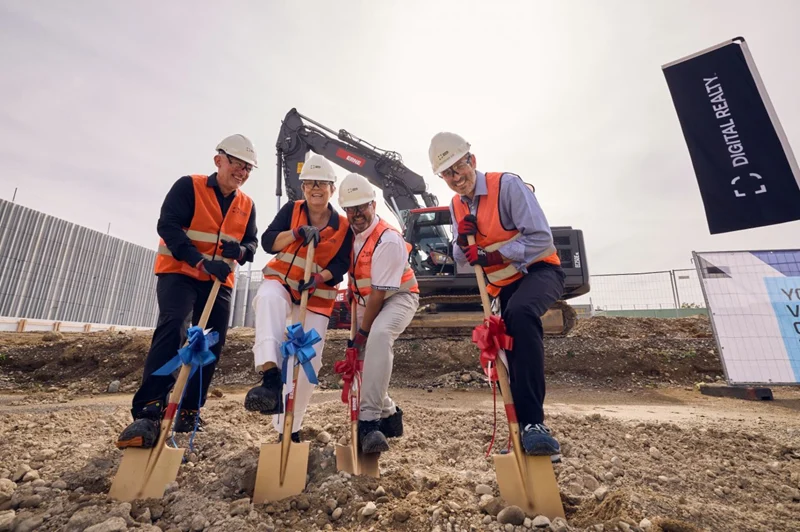
Digital Realty breaks ground on fourth data center in Zurich, Switzerland
Digital Realty has started construction on ZUR4, a fourth data center at its campus in Glattbrugg, Zurich, adding 15MW of IT capacity across roughly 6,300 sqm. The facility, first announced in 2023, is due to go live in 2028 and will support high-density and AI workloads through what the company describes as state-of-the-art cooling systems.
The new building extends a Swiss footprint that already spans three live facilities offering around 45MW of capacity combined. Local officials welcomed the expansion as a boost to the region’s economy, with Digital Realty noting the campus now connects more than 200 on-site customers as part of a global base of over 6,000.

AI’s infrastructure bill could reach $50 trillion
New analysis from PwC forecasts that global capital expenditure on data centers will reach US$31.6 trillion between 2026 and 2050, as sustained AI-driven demand for computing infrastructure reshapes capital allocation across the technology, energy, real estate, and financing sectors. The report frames the buildout as one of the defining investment challenges of the coming decades, with the pace of spending expected to more than double on an annual basis by mid-century.
PwC expects the United States to capture close to half of that global spending, with access to reliable power and semiconductor supply emerging as the key constraints shaping where and how quickly projects can be developed. The findings add to a growing body of forecasts underscoring just how capital-intensive the AI infrastructure race has become for investors and developers alike.

Anthropic agrees $35 billion cloud deal with Lambda – report
Anthropic has reportedly signed a cloud computing agreement worth $35 billion with AI cloud provider Lambda, the latest in a string of large infrastructure commitments the company has made this year as it races to secure compute capacity. The deal reportedly draws on capacity tied to a Hut 8 data center leased by NVIDIA, underscoring the increasingly interconnected web of leases and partnerships underpinning frontier AI development.
The agreement reflects the scale of commitments AI labs are now making to lock in long-term compute supply, with capacity increasingly sourced through multi-party arrangements involving chipmakers, neoclouds, and data center operators rather than direct build-outs alone.
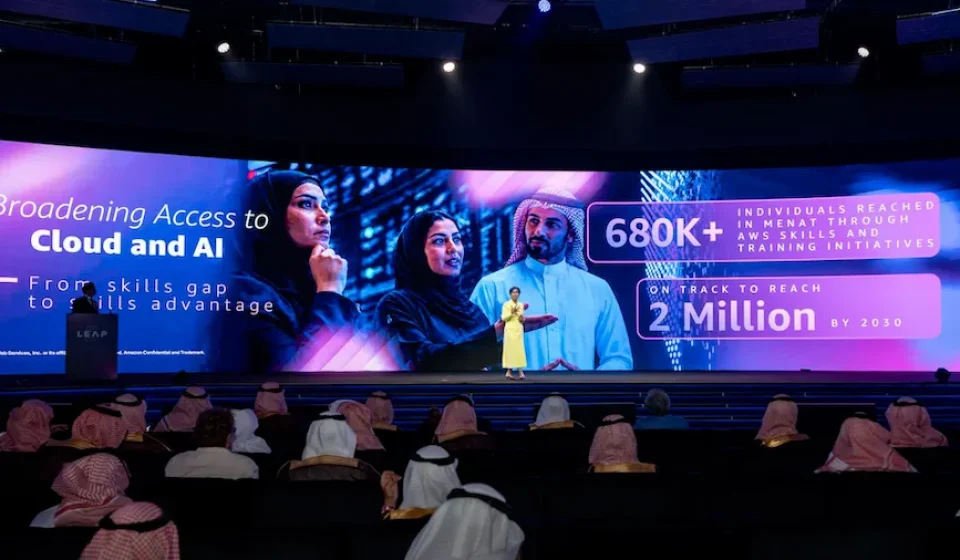
AWS to launch Saudi cloud region in December, plans 50MW capacity
Amazon Web Services has confirmed its first cloud infrastructure region in Saudi Arabia remains on track to launch in December 2026, backed by an investment of roughly $5.3 billion. The region will bring AWS’s global infrastructure footprint to 40 regions worldwide as the company continues to expand its presence across the Middle East.
The Saudi launch adds to AWS’s broader push into the region alongside partners such as HUMAIN, reflecting the growing strategic importance Gulf markets are placing on securing local cloud and AI infrastructure as sovereign digital ambitions accelerate.
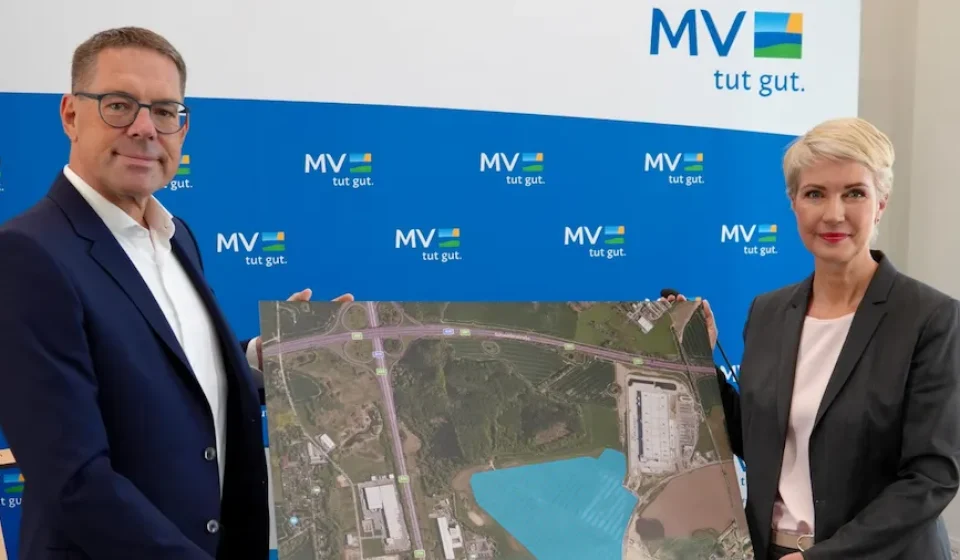
Schwarz Group plans $6.5 billion Germany data centre project
German retail giant Schwarz Group, the owner of Lidl and Kaufland, plans to invest up to €5.6 billion (US$6.5 billion) by 2033 in a new data center project in Mecklenburg-Vorpommern. The facility is expected to reach 240MW of capacity by 2033, with the potential to scale further to a 1GW grid connection over time.
The move marks a significant diversification for the retail conglomerate into digital infrastructure, reflecting a broader trend of large European corporates building out proprietary data center capacity to support AI and cloud ambitions rather than relying solely on third-party providers.